
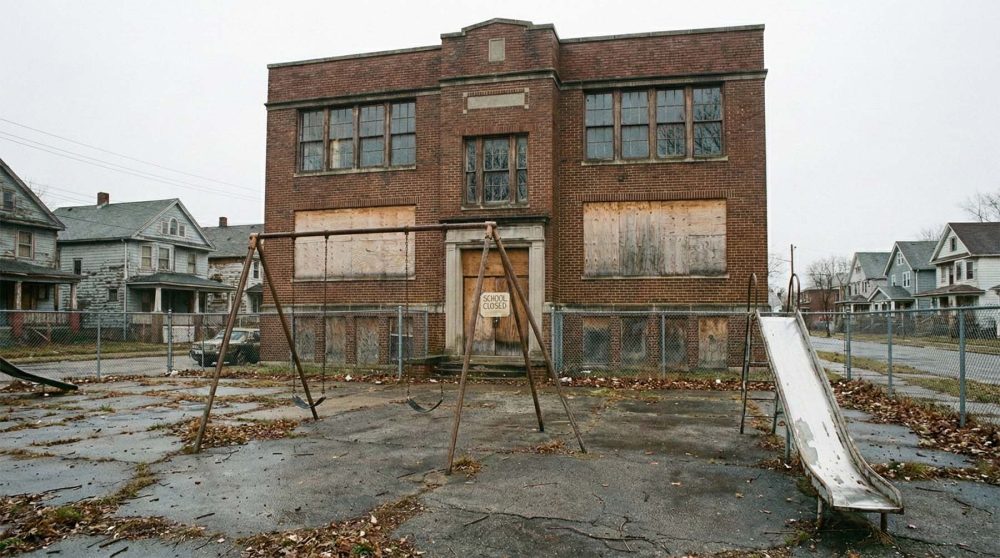
A recent report highlighted by Columbus Free Press paints a stark picture: 17 charter school failures in Columbus in a single year. The broader article, titled Ohio Charter Schools: Waste, Fraud, Abuse and Profiteering, characterizes the state’s charter sector as a “wasteful, inefficient, duplicate school system,” arguing that hundreds of schools have closed over the past two decades, often after operators collected millions in public funding.
Read the source article here:
https://columbusfreepress.com/
The language is pointed. But the underlying question is not rhetorical. What does it mean for students and taxpayers when a publicly funded school opens, enrolls children, receives state money, and then shuts down within a few years?
Closure is not rare in Ohio’s charter sector
Ohio’s own data confirm that closure is a defining feature of its charter landscape. Since the late 1990s, hundreds of community schools have closed statewide for academic failure, financial mismanagement, or sponsor action. The Ohio Department of Education and Workforce publishes annual reports on community schools that document both openings and closures, as well as sponsor evaluations.
While supporters argue that closure is proof of accountability, critics note that closure often comes only after significant public dollars have already been spent. In the case of ECOT, Ohio’s largest online charter school, the institution collected nearly $1 billion over two decades before being forced to shut down in 2018 following state findings that it had overcharged taxpayers for students who did not meet participation requirements. The Ohio Auditor later issued findings for recovery exceeding $100 million tied to overpayments.
Those are not theoretical concerns. They are documented enforcement actions.
The human cost of instability
Research on school mobility has consistently shown that frequent school changes are associated with lower academic achievement and higher dropout risk. The National Center for Education Statistics has reported that student mobility disrupts academic continuity and disproportionately affects low income students.
When a charter school closes mid year, families must find new placements, districts must absorb students with little notice, and teachers lose positions. Unlike traditional public school districts, which rarely dissolve entirely, charter schools are structurally easier to close. That flexibility may be framed as accountability, but it also introduces instability into communities already facing economic strain.
In Columbus, where district schools already compete for enrollment amid declining birth rates and funding pressures, a cycle of charter openings and closures can amplify uncertainty.
Public funding, private management
Ohio law requires community schools to operate as nonprofit entities. However, many contract with private management organizations that can be for profit. The Ohio Department of Education’s own reporting acknowledges that governing authorities may contract with outside operators for day to day operations, including staffing, curriculum, and facilities management.
This structure has been at the center of past controversies. Investigations into ECOT revealed extensive payments to affiliated private companies for curriculum and management services. While not every charter follows that model, the governance framework allows public funds to flow through private entities in ways that can be opaque to the public.
The Columbus Free Press article frames this as profiteering. State audits and court rulings have not labeled the entire sector corrupt, but they have documented significant instances of financial mismanagement and overpayment. The line between innovation and extraction can become blurred when oversight mechanisms lag behind expansion.
Are outcomes justifying the disruption?
Supporters of charter schools argue that choice provides opportunity, especially in urban districts where families seek alternatives. Some individual charter schools in Ohio post strong academic results. Yet statewide analyses from Stanford University’s CREDO research have shown mixed performance overall, with many Ohio charter schools performing at or below comparable district schools when controlling for student demographics.
If the academic gains are uneven and closures frequent, the policy question becomes sharper: does maintaining a parallel system improve educational equity, or does it fragment resources?
Traditional public schools operate under elected boards, open meeting laws, and collective bargaining agreements that provide structural stability. Teachers are unionized, budgets are publicly debated, and schools rarely disappear overnight. Critics of privatization argue that those democratic guardrails are not bureaucratic obstacles but safeguards.
Seventeen in one year
Seventeen closures in one year is not just a statistic. It represents disrupted classrooms, displaced teachers, and redirected funding streams. Even if each closure followed due process, the pattern invites scrutiny.
Accountability should not mean waiting until failure becomes visible enough to close the doors. A truly accountable system minimizes the scale of failure before it reaches students.
The 2017 criticism that Ohio’s charter experiment functioned as a “duplicate system” draining district resources may sound polemical. But the data on closures, recovery findings, and performance disparities suggest that the structural debate is far from settled.
If Ohio is committed to public education as a public good, then every publicly funded school must operate with transparency, stability, and outcomes that justify its existence. When closure becomes routine, it raises a difficult question: is churn a feature of the model, or evidence that the model needs deeper reform?